Moszoro, Marian
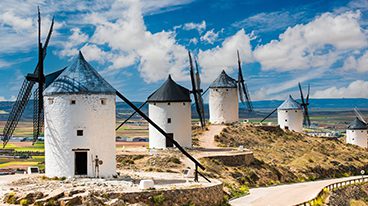
Two Polish entrepreneurs were so passionate about windmills that their friends nicknamed them "Don Quixote." Their plan to make money through free wind energy convinced banks to back their ambitious wind farm project. But when the project encounters delays, some begin to question whether they have adequately accounted for all the risks associated with such a large-scale capital project. Were these two about to live up to their deluded eponym?
Read article 
Arana, Sergio; Echaniz, Ignacio; Pascual, Julio; Prats Moreno, Mª Julia
Jeremy Stanford shoes helped the clothing brand El Ganso get up and running. But after seven years of expansion, and with 32 outlets in five countries, the company had to rethink its business model and growth strategy. The question was whether it should stay independent and keep financing itself with its own money, or turn to outside investors in order to expand faster.
Read article 
Soley Sans, Jorge; Sánchez de León, Carlos
The Bankia case raises many questions. IESE Prof. Jorge Soley and Carlos Sánchez de León analyze the savings bank, from its creation and IPO, to its nationalization and restructuring, which has seen branch closures, layoffs and a new commercial strategy. How much wiggle room does a nationalized bank have? And how will Bankia's woes affect the rest of the Spanish banking system?
Read article 
del Potro, Eloy; Stein Martínez, Guido; Pin Arboledas, José R.; Vázquez-Dodero de Bonifaz, Juan Carlos
What would you do if your refusal to engage in bribery threatened the viability of your business project? Is extortion ever justifiable if it's for a good cause? This award-winning IESE case study explores the real-life dilemma a European company faced when trying to bring electricity to a central African country.
Read article 
Sauerbronn Jacinto, Rodrigo; Cerquinho, Fábio; Rocha e Oliveira, Paulo
What can a company do when it enters a foreign market that is already dominated by an entrenched market leader? This is a common problem for companies seeking to expand their business to overseas markets. A case study on pipe manufacturer Amanco's struggles to expand its market share in Brazil offers lessons on how companies can take on and even overcome a domestic market leader.
Read article 
Sachon, Marc; Laux, Eric
Like many retailers, Media Markt, Europe's largest retailer of consumer electronics, saw opportunities to boost revenue through online sales. But its first attempt to sell over the Internet led to clashes between its sales channels, and its online store eventually closed. Now, having acquired the Internet dispatcher, Redcoon, Media Markt is ready to try again. Will it fare better the second time around?
Read article 
Sachon, Marc; Granero, María; Suzar, Noah
When EADS Defense & Security decided to change its supply management strategy, it faced the challenge of a new governance model, a new organizational structure and a new sourcing strategy, made even more complex by the highly politicized nature of defense procurement linked to political as well as business realities. An IESE case study walks readers through the minefield.
Read article 
Campoy, David; García Pont, Carlos; Rocha e Oliveira, Paulo
Staging a major sporting event affords the host city a chance to boost its international profile and reputation. Barcelona, for example, is still reaping the positive effects of hosting the 1992 Olympic Games. As Brazil prepares for the 2014 World Cup and the 2016 Olympics, a case study examines what can be learned from the "Barcelona Effect" 20 years later.
Read article 
Olale, Esther; Vaccaro, Antonino
This two-part IESE case analyzes marketing issues associated with a controversial sector: the tobacco industry. It proposes a discussion about the ethics of tobacco advertising and the adoption of reactive versus proactive governmental policies.
Read article 
Moscoso, Philip G.; Duque, Marina
Producing in-house when most of your competitors outsource their work may seem counterintuitive. Throw in the fact that competition from lower-cost suppliers will be fierce, and one can only question the wisdom of such a strategy. Yet this is precisely the strategy Loewe was contemplating as it wavered between closing down its manufacturing plant or else transforming it into a center of industrial excellence.
Read article